

Is a Coffee Subscription With Transparent Sourcing Worth It?
Last Updated: November 1, 2026
Quick Summary
A coffee subscription with transparent sourcing is worth it if the roaster publishes the farm or cooperative, altitude, variety, processing method, and roast date for every coffee, not just a flagship lot. Score each service against a five-criteria rubric out of 25; 20 or higher means there is enough evidence to check.
- Ask for country, region, grower or cooperative name, altitude, variety, processing method, and a printed roast date.
- Cross-check the stated region against the variety to catch listings written by someone who never saw the lot.
- Fair Trade confirms a price floor was met, not the final price the producer received.
- Expect a few dollars more per bag and a smaller, rotating selection as the cost of traceability.
- Test claims with the six-origin sample pack before committing to a recurring subscription.
Table of Contents
- What Transparent Sourcing Actually Means in a Coffee Subscription
- How to Verify Sourcing Claims Before You Subscribe
- What Makes a Traceable Coffee Subscription Different
- Why an Ethically Sourced Coffee Subscription Starts With Producer Payments
- Direct Trade Coffee Subscription vs. Fair Trade: What the Labels Tell You
- Freshly Roasted Coffee Delivery: Why Roast Date Beats Everything Else
- The Trade-Offs of Transparent Sourcing Nobody Mentions
- Start With a Sample Pack Before You Commit
- Frequently Asked Questions
What Transparent Sourcing Actually Means in a Coffee Subscription
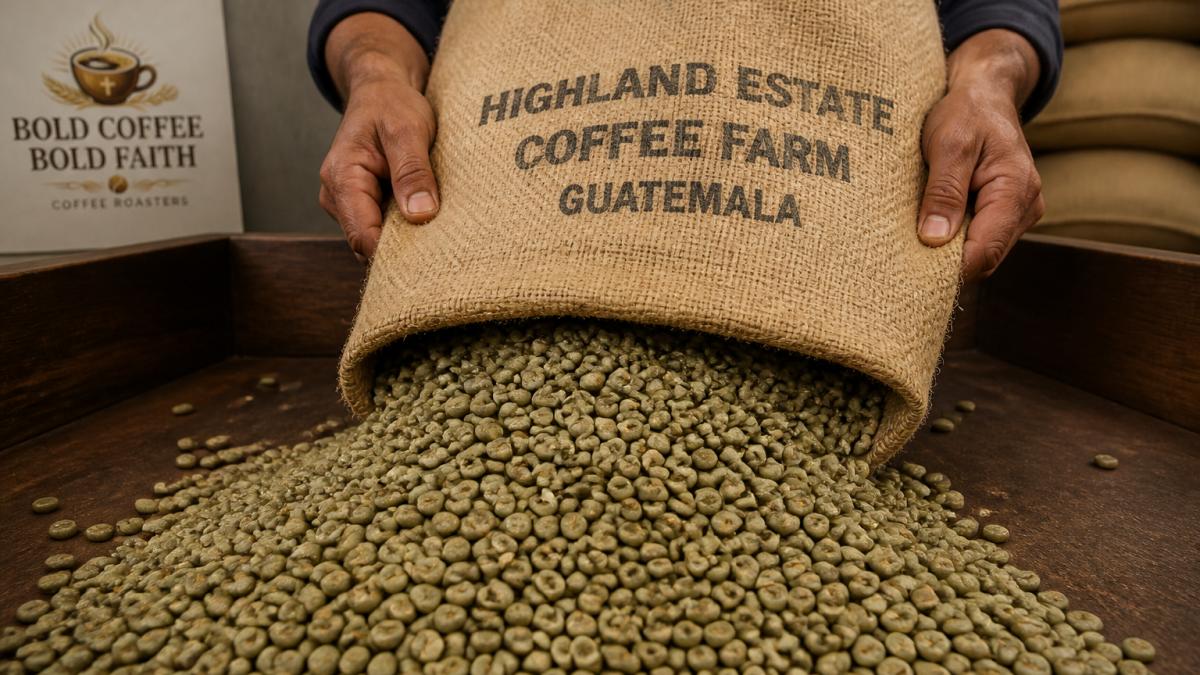
Transparent sourcing is the practice of publishing where a coffee came from, who grew it, and how it was bought, in enough detail that a customer can check the claim.
That distinction matters. Plenty of roasters publish a country name and a pretty farm story.
At HeBrews 11:one, we are a Christian-owned business, and we treat sourcing disclosure as part of that mission rather than a marketing add-on.
Here is the plain version: a traceable coffee subscription is one where the roaster is willing to be checked.
The Details a Transparent Roaster Should Publish
The bare minimum for any coffee sold as traceable is a set of facts a buyer can act on. Ask for these before you pay for a subscription:
- Country and region, specific enough to locate on a map
- Grower or cooperative name, not just "smallholder farmers"
- Altitude range in meters
Notice how much of that list is boring. That is the point. Transparency is not a story, it is a spec sheet. A roaster who will not give you the altitude and the variety is usually hiding something less flattering than a trade secret.
How to Verify Sourcing Claims Before You Subscribe
Verification starts with a simple test: pick one coffee from the subscription and try to trace it.
Most guides stop there. A better approach is to score every subscription against the same rubric so you are comparing evidence, not adjectives. Here is a rubric you can use, with five criteria and a simple 1-to-5 score for each:
| Criterion | What earns a high score | What earns a low score |
|---|---|---|
| Traceability | Farm or cooperative, harvest, lot, altitude, variety, and process published per coffee | Country name only, or "smallholder farmers" with no lot detail |
| Payment disclosure | Named buying relationship and some indication of price relative to market | No mention of how producers were paid |
| Freshness | Roast date printed and ship window stated | No roast date, warehoused stock |
| Selection | Rotating lineup with sourcing detail on every coffee, not just the flagship | One showcase lot, vague on the rest |
| Flexibility | Clear pause, skip, and cancel terms before checkout | Minimum commitment or auto-renewal buried in terms |
Score each subscription out of 25. A service that scores 20 or higher is publishing enough for you to check.
Three practical checks we would run alongside the rubric:
- Cross-check the region against the variety. A farm at 900 meters in Nicaragua and a farm at 1,900 meters in Ethiopia grow very different coffee. If the details contradict each other, the listing was written by someone who never saw the lot.
- Look for lot-level language. "Single origin" is a country. A lot is a specific harvest. Traceable coffee subscription programs usually name the lot, the harvest year, and the importer.
- Ask directly. A short email asking "who grew this and how was it purchased?" separates serious roasters from storytellers. The serious ones answer within a day.
For independent verification, check the certifier's own public database rather than the roaster's badge.
Charitable claims deserve the same scrutiny as farm claims. Our guide on how to verify coffee charity donations walks through exactly what to request.
What Makes a Traceable Coffee Subscription Different
The difference is not the coffee itself. It is the paperwork behind it.
A traceable coffee subscription keeps sourcing information attached to each lot from purchase through roast. That means the farm name travels with the green coffee into the roastery, onto the bag, and into the product page you read before ordering.
You can see the difference in how a roaster describes a single coffee. Compare a vague listing to this one from our own catalog: our Ethiopia Natural names the Sidama Zone, the smallholder farmers, the 1,700 to 1,900 meter altitude, the Indigenous Heirloom Cultivars, and the natural processing method.

Where this gets hard is consistency. A roaster can be meticulous about one showcase lot and vague about the other nine.
Why an Ethically Sourced Coffee Subscription Starts With Producer Payments
An ethically sourced coffee subscription is only as ethical as what the farmer was paid. Everything else, the certifications, the impact statements, the recycled packaging, sits downstream of that number.
Here is the uncomfortable part most guides skip: many roasters cannot tell you what the producer was paid, because they bought through layers of intermediaries and never asked.
What to look for instead of a slogan:
- A named purchasing relationship, such as a cooperative or a specific farm
- A stated buying model, whether direct, through a cooperative, or through an importer
- Some indication of how the price compares to the commodity market
If a roaster will not discuss payment terms at all, you have your answer. For a fuller treatment of what ethical sourcing involves beyond the label, our guide to the benefits of ethical coffee sourcing covers how producer payments, labor standards, and long-term farm relationships fit together.
Single Origin Favorites Sample Pack 6-count 2 oz packs →
Direct Trade Coffee Subscription vs. Fair Trade: What the Labels Tell You
Fair Trade is a third-party certification with audited standards and a published price floor.
The practical difference comes down to who is doing the checking, and what the label actually discloses about the money that reached the farmer.
| Feature | Fair Trade | Direct Trade |
|---|---|---|
| Who verifies | Independent certifier | The roaster, on its own |
| Standards | Published, audited | Set by the buyer and producer |
| Price floor | Defined by the certifier | Negotiated case by case |
| Traceability depth | Cooperative level | Can reach farm or lot level |
| Payment disclosure | Confirms a floor was met, not the final price paid | Varies; some roasters publish prices paid, many do not |
| Main weakness | Cost and paperwork for small farms | No outside accountability |
Here is the gap most label comparisons miss: a certification tells you a standard was met, not how much the producer actually received.
That is why payment transparency deserves its own line in any comparison. Ask each service three questions:
- Who was the named purchasing partner? A cooperative, a specific farm, or an importer.
- What was the buying model? Direct, through a cooperative, or through an importer.
- How did the price compare to the commodity market? Even a range or a stated premium is more useful than a slogan.
A roaster who answers all three is doing something rarer than any label.
Our honest read: neither label replaces asking questions. If you want to decode certifications before committing, our practical guide on how to identify Fair Trade coffee breaks down what each mark actually covers.
Freshly Roasted Coffee Delivery: Why Roast Date Beats Everything Else
Roast date is the single most useful number on a coffee bag, and it is the one most subscriptions hide.
Freshly roasted coffee delivery only means something if the roaster ships close to the roast. Ask how long the gap is between roast and ship.
This is where small-batch roasting earns its keep. If freshness and delivery timing are your main concern, our premium coffee delivered guide covers what to check on shipping and roast schedules.
The Trade-Offs of Transparent Sourcing Nobody Mentions
Transparent sourcing costs money, and someone pays for it. That someone is usually you, at a few dollars more per bag than a grocery-store label.
Three trade-offs worth knowing before you subscribe:
- Smaller selection. A roaster who only buys lots it can fully document will pass on plenty of good coffee. Rotating coffees may sell out and not return.
- Higher price per bag. Traceable lots from named farms cost more green. Expect to pay for the paperwork, not just the beans.
- Thinner margins for the roaster. Direct relationships and small batches are less efficient than commodity buying. Some of that shows up as less frequent discounts.
The limitation cuts the other way too. A roaster can publish perfect sourcing detail and still roast inconsistently, ship slowly, or bury you in subscription terms you did not read.
Watch out: some programs advertise transparency while locking you into a minimum commitment or auto-renewal that is hard to exit.
Start With a Sample Pack Before You Commit
The cheapest way to test a roaster's claims is to buy a small amount and check the bag against the website.
Our Single Origin Favorites Sample Pack is built for exactly this. Six 2-ounce packs, one each from Brazil, Colombia, Costa Rica, Ethiopia, Honduras, and Tanzania, at $19.99.
Best for: anyone who wants to verify a roaster's transparency before committing to a recurring subscription. Skip if: you already know your favorite origin and would rather buy a full bag.
Frequently Asked Questions
What does sourcing transparency mean for coffee?
It means the roaster publishes the details behind each bag: the country and region, the farm or cooperative, the altitude, the variety, and the processing method. A transparent sourcing label lets you trace a bag back to a specific place rather than a vague continent. HeBrews 11:one lists the grower, region, and variety for each single origin, so you can see exactly what you are drinking before you order.
Does traceable coffee mean it is ethically sourced?
Not automatically. Traceability tells you where beans came from; ethical sourcing also covers how producers were paid and treated. A bag can name a farm and still leave payment terms unstated. Look for both: named origins plus a clear statement about fair wages and sustainable farming. HeBrews 11:one pairs origin details with a stated commitment to fair wages and no forced labor.
How can I check whether coffee farmers are paid fairly?
Ask the roaster directly what producers are paid and how the relationship works. Look for named cooperatives or farms, published sourcing policies, and membership in recognized certification programs. If a roaster cannot explain the payment structure, that silence is your answer. Direct relationships and cooperative partnerships, like the smallholder groups behind
How often should a coffee subscription deliver freshly roasted beans?
Match delivery frequency to how much you drink. Choose a delivery frequency that matches how much you drink, so beans reach you while they are still fresh. Coffee tastes best within two to four weeks of the roast date, so ordering smaller amounts more often beats stockpiling. Check that the roaster prints a roast date on the bag and ships within a day or two of roasting.
What is the difference between direct trade and fair trade coffee?
Fair trade is a third-party certification with audited standards and a minimum price floor. Direct trade is a roaster's own relationship with producers, often paying above market rates, but it is not independently certified. Both can work well. The key is asking what the label actually guarantees, then checking whether the roaster publishes specifics about the farms and the terms behind each lot.
Most coffee subscriptions ask you to take their word for it. We would rather you checked. HeBrews 11:one publishes the grower, region, altitude, and process on every single-origin coffee we sell, roasts in small batches, ships within one day of your order, and gives 20% of profits to Christian ministries. Start with the sample pack, read the labels, and see whether the details hold up. Get started with HeBrews 11:one and taste the difference transparency makes in the cup.
