

7 Ways to Tell If Your Coffee Is Fresh
Quick Summary
You can tell whether coffee is fresh by checking the roast date, smelling the beans, looking for a slight sheen, and tasting a brewed cup. Whole beans in a sealed bag with a one-way valve keep their best flavor longest. Fresh coffee smells bright and tastes lively, while stale coffee smells dull and tastes flat.
- Fresh beans often have a slight sheen from natural oils, while stale beans look dry or dusty.
- Whole beans keep their aromatic oils longer than pre-ground coffee.
- Store beans in a cool, dark, dry cabinet in an airtight container.
- Check your grinder and water temperature before blaming the beans for flat flavor.
Table of Contents
- Why Freshness Matters in Your Daily Cup
- How to Tell Stale Coffee Beans by Smell, Look and Taste
- How Long Do Coffee Beans Stay Fresh After Roasting?
- How to Store Coffee Beans to Keep Them Fresh
- Brewing Mistakes That Can Mimic Stale Coffee
- Start Your Next Bag Fresh With HeBrews 11:one
- Frequently Asked Questions
Last Updated: November 2, 2026
Most people assume they can tell whether their coffee is fresh by the smell of the bag. Often they can, but not always, and the bag itself is not the whole story. At HeBrews 11:one, we roast in small batches because we believe every cup should honor the care that goes into it, and as a Christian-owned business we see that stewardship as part of our calling. Knowing that coffee is fresh matters in a daily cup because it shapes flavor, aroma and the simple pleasure of a good morning. Here are seven practical ways to tell whether your coffee is fresh.
Why Freshness Matters in Your Daily Cup
Freshness affects how coffee tastes, smells and brews. Coffee begins to lose its aromatic compounds soon after roasting, so beans that sit for weeks often taste flat compared to beans roasted recently. This is a general trend in specialty coffee, not a fixed timetable.
Fresher coffee also gives you more control. When the flavors are clear, small changes in grind or water temperature show up in the cup. Stale coffee hides those differences, which can make a good bean seem ordinary.
The roast date tells you when the beans were roasted, which is the starting point for freshness.
An expiration date tells you something different. It is often a shelf-life estimate set for packaging and retail, and it does not reliably show peak flavor.
Coffee roasted very recently may benefit from a short rest before brewing, since gases released after roasting can affect extraction. Check the roaster's guidance for the bean you buy.
How to Tell Stale Coffee Beans by Smell, Look and Taste
Your senses are the fastest way to check freshness. Start with smell. Open the bag and breathe in. Fresh beans have a bright, layered aroma. Stale beans smell dull, cardboard-like or faintly sour.
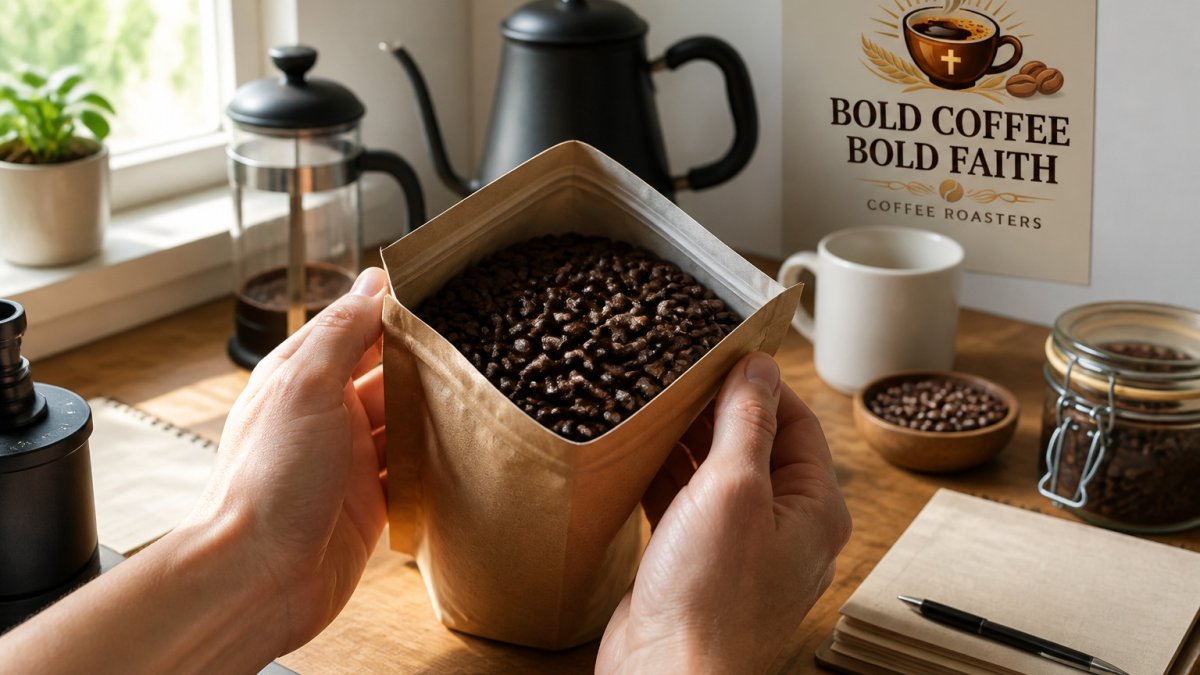
Next, look at the beans. Fresh roasted beans often have a slight sheen from natural oils. Beans that look dry, dusty or uniformly matte may have lost much of their freshness. Oils that have oxidized can also turn dull.
Finally, taste. Brew a cup and pay attention to flavor. Fresh coffee tastes lively and balanced. Stale coffee tastes flat, woody or sharply bitter.
A Simple Three-Step Freshness Test at Home
- Smell the dry grounds or whole beans and note the aroma.
- Check the beans for sheen and even color.
- Brew two cups from the same bag, one right away and one after a short rest, then compare flavor.
Repeat this test with each new bag. Over time you will learn what fresh coffee smells and tastes like to you.
Here is a quick reference for the three senses you can use to check whether your beans are still fresh.
Sense |
What fresh coffee looks like |
What stale coffee looks like |
|---|---|---|
Smell |
Bright, layered aroma |
Dull, cardboard-like or sour |
Look |
Slight sheen from natural oils |
Dry, dusty or uniformly matte |
Taste |
Lively and balanced |
Flat, woody or sharply bitter |
How Long Do Coffee Beans Stay Fresh After Roasting?
There is no single shelf life for coffee, and any article that gives you one number is oversimplifying. Freshness is a window that depends on four things: whether the coffee is whole bean or pre-ground, whether the bag is sealed or opened, the roast level, and how the coffee is stored. Whole beans in a sealed bag with a one-way valve generally keep their best flavor for a window after the roast date, and the variables below shift that window.
Whole bean versus pre-ground is the biggest split. Whole beans keep most of their aromatic oils inside the bean until you grind, so they age slowly. Pre-ground coffee exposes far more surface area to oxygen the moment it is ground, and a common pattern is that ground coffee loses its brightest aromatics within days of grinding, even in a sealed bag. If you buy pre-ground, treat the grind date, not just the roast date, as the clock that matters most.
Sealed versus opened changes the timeline again. An unopened bag with a working one-way valve is protected from outside oxygen, so the beans inside age gradually. Once you open the bag, oxygen enters every time you reseal it, and the pace of staling picks up. Once opened, it is best to finish a bag sooner rather than later, and to buy smaller bags if you brew slowly. If you want to judge whether premium specialty coffee justifies buying smaller, fresher batches, see is specialty coffee worth the cost.
Coffee Sample Pack | 6 Best Selling 2oz Coffee Bags →
Roast level shifts the window in both directions. Darker roasts tend to show staling sooner on the palate because the roast character itself is more fragile, while lighter roasts often hold their structure a bit longer. Very fresh coffee of any roast may need a short rest of a few days to a week after roasting, because carbon dioxide released during roasting can interfere with extraction and make the cup taste sharp or foamy. Espresso in particular often benefits from that rest. Check the roaster's guidance for the specific bean, since bean density and processing also play a role.
Watch out: a bag past its ideal window is usually a quality issue, not a safety issue. Stale coffee tastes flat, woody, or papery, but it is not automatically unsafe. Moisture, mold, or contamination are separate warning signs and should be treated differently from simple age.
A practical way to use all of this: note the roast date, note whether the bag is sealed or opened, and note whether the coffee is whole bean or ground. Then set a realistic finish-by date for your own bag instead of relying on a generic number. Repeat with each new bag, and you will quickly learn how your roaster's coffee and your brewing habits interact with time.
How to Store Coffee Beans to Keep Them Fresh
Good storage slows the loss of freshness, and the mechanisms are worth understanding so you can judge any container or habit on your own. Four forces drive staleness: oxygen, light, heat, and moisture. Oxygen reacts with aromatic oils and turns them dull; light accelerates that breakdown; heat speeds every chemical reaction; and moisture invites both flat flavor and, in the worst case, mold. A good storage setup limits all four at once.
Start with the bag. Many roasters package whole beans in bags with a one-way valve, which lets carbon dioxide escape after roasting while limiting oxygen entering. If your bag has a working valve and reseals well, keeping beans in it is a reasonable default. If the bag is flimsy, tears, or lacks a valve, move the beans to an airtight container. Opaque ceramic, tinted glass, or metal canisters work well because they block light. Clear jars on a sunny counter look nice but expose beans to the light that speeds staling.
Placement matters as much as the container. Store beans in a cool, dark, dry cabinet away from the stove, the oven, the dishwasher, and any sunny window. Beans kept beside a heat source tend to taste flatter sooner than beans stored in a closed cabinet. Avoid the refrigerator for daily-use beans: every time you open the door, warm air meets cold beans and moisture can condense on them. Moisture is the one variable that can turn a quality problem into a safety problem, so keep beans dry.
Freezing is a legitimate option if you do it deliberately. For bulk purchases, divide beans into portions sized for about a week of brewing, seal each portion in an airtight bag with as little air as possible, and freeze. When you are ready to use a portion, let the sealed bag come fully to room temperature before opening it, so condensation forms on the bag rather than on the beans. Refreezing the same beans repeatedly is where freezing goes wrong, because each thaw cycle introduces moisture.
Watch out: a container that is airtight but stored in a warm, bright spot still fails, because the container cannot block heat and light that reach it from outside. Treat container, location, and portion size as one system rather than three separate tips.
Finally, match the container to how fast you drink coffee. If a bag lasts two weeks, a simple airtight canister in a cabinet is enough. If a bag lasts two months, portioning and freezing part of it will preserve far more flavor than any single container can.
Brewing Mistakes That Can Mimic Stale Coffee
Sometimes coffee tastes stale when the beans are fine. A few brewing errors can cause flat or bitter flavors:
- Grinding too fine or too coarse for your brew method
- Using water that is too cool or too hot
- Brewing with a dirty grinder or coffee maker
- Letting brewed coffee sit on a warmer for a long time
Before you blame the beans, check these variables. Adjust one at a time so you can tell what changed the cup.
Start Your Next Bag Fresh With HeBrews 11:one
Freshness is easier to enjoy when you know the roast date and have a good bag in hand. HeBrews 11:one roasts in small batches to ensure maximum freshness. Our Coffee Sample Pack | 6 Best Selling 2oz Coffee Bags lets you try several varieties at a small size, so you can find the cup you love most.

We also donate 20% of our profits to support Christian ministries, and we prioritize ethical sourcing with fair wages and sustainable farming. For a full walkthrough of brewing fresh beans, see our how to brew fresh coffee beans guide.
Frequently Asked Questions
How do you tell if coffee beans are stale?
Start with smell. Fresh beans have a strong, layered aroma when you open the bag or grind them. Stale beans smell flat, papery or faintly like cardboard. Next, look at the surface: beans that have lost their oils appear dull and dry instead of slightly glossy. Finally, taste a cup. Stale coffee often tastes flat, muted and a little bitter, with few of the fruit, chocolate or caramel notes the roaster described. If all three checks point the same way, the beans have likely aged past their best.
Is ground coffee still good after a year?
Ground coffee loses flavor much faster than whole beans because grinding exposes more surface area to air. A year-old bag of ground coffee, even unopened, will usually taste flat compared with beans roasted recently. It is still safe to drink in most cases, but the flavor will be weak. For the best cup, buy ground coffee in smaller amounts and use it within a few weeks of opening. HeBrews 11:one offers both standard ground and whole bean options so you can choose what fits your routine.
Can coffee be too fresh to brew?
Yes. Freshly roasted coffee releases carbon dioxide, a process called degassing. Brewing too soon can cause bubbling, uneven extraction and a sour or sharp taste. Many roasters suggest waiting several days after roasting before brewing, and espresso often needs a longer rest. Check the roast date on your bag and give fresh beans a short rest before brewing.
What does stale coffee taste like?
Stale coffee tastes flat and dull. The bright fruit, chocolate and caramel notes fade, leaving a thin body and a dry or woody finish. Some people notice a bitter or cardboard-like taste as the oils oxidize. Because brewing mistakes can also produce bitterness, compare a cup of beans you suspect are stale with a cup made from a newer bag, using the same grind size, water temperature and brew time.
