

Is Specialty Coffee Worth the Cost
Last Updated: October 26, 2026
Quick Summary
Is specialty coffee worth the cost depends on what you value. Specialty coffee costs $0.70-$0.85 per cup versus $0.24 for commodity coffee, but the premium reflects traceability, freshness, ethical sourcing, and with HeBrews 11:one, support for global Christian ministries.
- Specialty coffee scores 80 points or higher on a certified 100-point scale, separating top-tier beans from grocery store coffee.
- Specialty coffee consumption rose from 53% of American adults in 2022 to 58% in 2026, driven by younger adults choosing beans for taste and story.
- Roasted specialty coffee averaged $32.75 per pound in March 2026, compared to $9.72 for grocery coffee in April 2026.
- HeBrews 11:one donates 20% of profits to Christian ministries worldwide and roasts in small batches shipped within one day.
- The premium pays off most clearly in black filter coffee like pour-overs, where specialty beans show distinct tasting notes commodity coffee cannot replicate.
Table of Contents
- Why We Started HeBrews 11:one: Faith, Quality, and Fair Trade
- What Defines Specialty Coffee and Why the Price Difference Exists
- Specialty Coffee vs Regular Coffee: The Real Differences
- Why Is Specialty Coffee Expensive
- Cost Per Cup: Does Specialty Coffee Actually Cost More When You Brew It
- How to Choose Specialty Coffee That Matches Your Brewing Method
- Start Your Specialty Coffee Journey with Sample Packs
- Frequently Asked Questions
Why We Started HeBrews 11:one: Faith, Quality, and Fair Trade
At HeBrews 11:one, we believe your daily coffee ritual can align with your faith and values. As a Christian-owned business, we spread the Gospel of Jesus Christ by donating 20% of our profits to ministries worldwide. That mission is reflected in our commitment to premium specialty grade coffee.
This guide explores whether is specialty coffee worth the cost. The answer depends on what you value, but once you understand the real differences between specialty and regular coffee, the premium starts to make sense: traceability, freshness, ethical sourcing, and, with HeBrews 11:one, support for global Christian ministries.
Past-week specialty coffee consumption has grown significantly. According to data from the National Coffee Association's Spring 2026 report, specialty coffee consumption rose from 53% of American adults in 2022 to 58% in 2026. Younger adults are driving this shift, and they're choosing specialty not just for taste, but for the story behind the beans.
What Defines Specialty Coffee and Why the Price Difference Exists
Specialty coffee is coffee that scores 80 points or higher on a 100-point scale evaluated by certified tasters. It's a grading standard that separates the top tier of beans from everything else on grocery store shelves.
The price difference reflects these distinctions. At the end of March 2026, the average roasted specialty coffee cost $32.75 per pound, according to the Specialty Coffee Retail Price Index. Meanwhile, roasted ground coffee at grocery stores averaged $9.72 per pound in April 2026, a 39% increase since January 2025, but still far below specialty pricing.
Bean Quality and Grading Standards
Each lot traces to a specific farm or cooperative, with details on the farmer, altitude, processing method, and roast date. That transparency costs money, since producers invest in documentation, quality control, and direct buyer relationships.
Freshness and Roast Date
HeBrews 11:one roasts coffee in small batches and ships orders within one day.
Specialty Coffee vs Regular Coffee: The Real Differences
Consider a concrete example. Our Kenya AA Coffee Beans come from farms in Othaya, Nyeri County, grown between 1,700-1,890 meters, fully washed, and dried on raised beds. The listed tasting notes include orange, lemon, and floral notes.

Why Is Specialty Coffee Expensive
The higher price reflects real costs that commodity coffee avoids.
Sourcing, Origin, and Traceability Costs
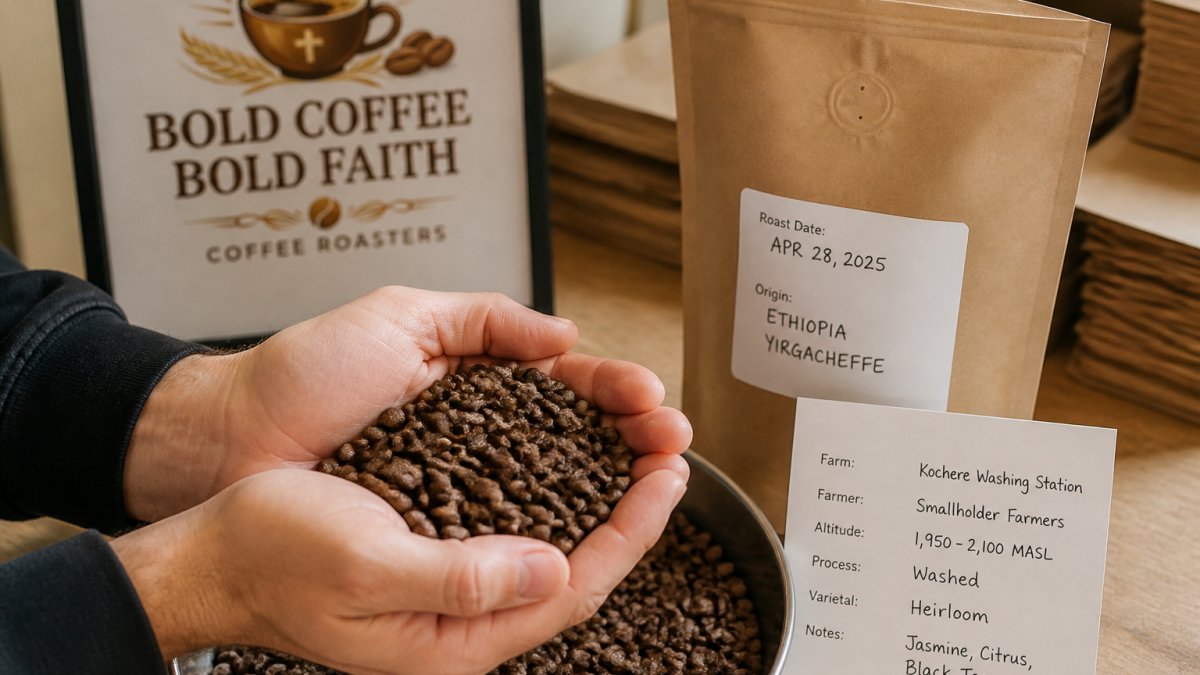
Traceability systems add cost too: documentation, testing, and certification all require infrastructure. When a bag names a specific farm and altitude, someone paid to verify that information and maintain records.
Processing, Farming Methods, and Fair Wages
Research published in the Journal of Agriculture and Food Research found that specialty coffee markets reward quality with higher farm-gate prices and may support shaded and diversified coffee-farming systems in origin countries. This isn't charity, it's recognition that better farming produces better coffee.
At HeBrews 11:one, we prioritize ethical sourcing with fair wages and sustainable farming practices.
Cost Per Cup: Does Specialty Coffee Actually Cost More When You Brew It
Add in what you're supporting: HeBrews 11:one donates 20% of its profits to support Christian ministries.
Single Origin Favorites Sample Pack 6-count 2 oz packs →
Specialty coffee costs more per pound, but the per-cup difference depends on your brewing method and workflow.
| Coffee Type | Cost Per Cup | Notes |
|---|---|---|
| Specialty coffee | $0.70-$0.85 | Varies by dose, grinder, water, storage |
| Commodity coffee | $0.24 | Gap can narrow with efficient workflow |
| Roasted specialty coffee | $32.75 per pound | March 2026 average |
| Roasted grocery coffee | $9.72 per pound | April 2026 average |
How to Choose Specialty Coffee That Matches Your Brewing Method
Your brewing method changes which specialty coffee works best, and whether the premium is worth paying at all. The same bag can be a revelation in a pour-over and a waste in a milk-heavy latte, so decide what you actually drink before picking a roast.
If you drink black filter coffee (drip, pour-over, Chemex): this is where specialty coffee earns its price most clearly. Lighter roasts and washed-process coffees show clarity, acidity, and distinct tasting notes that commodity coffee cannot replicate. A washed Kenya AA, with its citrus and floral brightness, comes through cleanly in a pour-over. Medium roasts are the safest all-around choice for a drip machine because they are bright enough not to taste flat but not so light they turn sour.
If you drink espresso: consistency and balance matter more than exotic flavor notes. Medium-dark roasts with good body hold up under pressure, and a blend like our Cowboy Blend in the Coffee Sample Pack gives espresso the balance it needs. Espresso uses a much larger dose per small drink, so the per-ounce premium is highest here; the payoff is body and sweetness, not delicate top notes.
If you drink milk-based drinks (latte, cappuccino, flat white): be honest about what milk does. Milk fat and sugar coat the palate and mute the delicate floral and fruit notes that justify a high-end single origin. Experienced drinkers often find a solid medium or medium-dark blend performs as well in a latte as a pricier light-roast single origin, because the milk masks the difference. If most of your cups include milk, spend less per bag and save the bright single origins for black-coffee days.
If you use a French press: fuller-bodied coffees shine. Medium and dark roasts, especially natural-process coffees, deliver the richness this method extracts. A natural-process Ethiopian with fruity sweetness and smooth body pairs well here.
A Buyer's Decision Framework
If you are unsure which method you will use most, start with a sample pack. Explore single-origin coffees from around the world to discover which origins and roast levels match your brewing style. Our Single Origin Favorites Sample Pack includes six origins with varying roast levels, so you can brew each with your preferred method and discover what resonates. That trial is the most reliable way to answer whether the premium is worth it for the way you actually drink coffee.

Start Your Specialty Coffee Journey with Sample Packs
The Single Origin Favorites Sample Pack is $19.99 and includes six 2-ounce packs of single-origin coffees. The Coffee Sample Pack is also $19.99 and includes six 2-ounce packs of blends and single-origin coffees.

Start with a sample pack. Then decide if specialty coffee is worth it for you.
Frequently Asked Questions
Does specialty coffee taste better than regular coffee?
Taste preference is personal. The Single Origin Favorites Sample Pack includes six single-origin coffees with distinct listed tasting profiles.
How fresh is specialty coffee when it arrives, and how long does freshness last?
HeBrews 11:one roasts coffee in small batches and ships orders within one day. The supplied information does not specify how long roasting-to-delivery takes or how long coffee stays fresh.
Is specialty coffee worth it if I drink coffee every day but don't consider myself a coffee enthusiast?
It depends on your priorities. The [Single Origin Favorites Sample Pack](https://hebrews11one.com/products/single-origin-favorites-sample-pack) is $19.99 and includes six 2-ounce packs of single-origin coffees with distinct listed tasting profiles.
What makes HeBrews 11:one's specialty coffee different from other options?
HeBrews 11:one is a Christian-owned business that donates 20% of its profits to support Christian ministries. We prioritize ethically sourced coffee with fair wages and sustainable farming practices. HeBrews 11:one offers premium specialty grade coffee and roasts it in small batches.
The choice between specialty and regular coffee comes down to what matters to you. If you value freshness, traceability, ethical sourcing, and supporting Christian ministries, specialty coffee from HeBrews 11:one delivers on all fronts. We roast in small batches, ship within one day, donate 20% of profits to Gospel work, and source from farms committed to fair wages and sustainable practices. Explore our specialty coffee selection and start your journey today.
